.png)
When the noise falls away


After a hectic few weeks, my birthday week was a surprisingly quiet one. With the extreme heat keeping us largely indoors and in reach of aircon, by Friday we were more than ready to escape to the forest for a much-needed weekend of peace and relaxation.
Our journey there was delayed, but as soon as we arrived, it ceased to matter.
Standing on the decking of our cabin, looking out into the trees, the stresses of the journey melted away. Pine branches overhung the decking, birds moved through the canopy, and butterflies and dragonflies passed through the clearing around us rarely stopping, and squirrels seemed to be everywhere, chasing each other across the decking, through the brambles and up the trees, making strange barking noises and thoroughly entertaining us.
Every time we go to the forest, it feels like coming home.

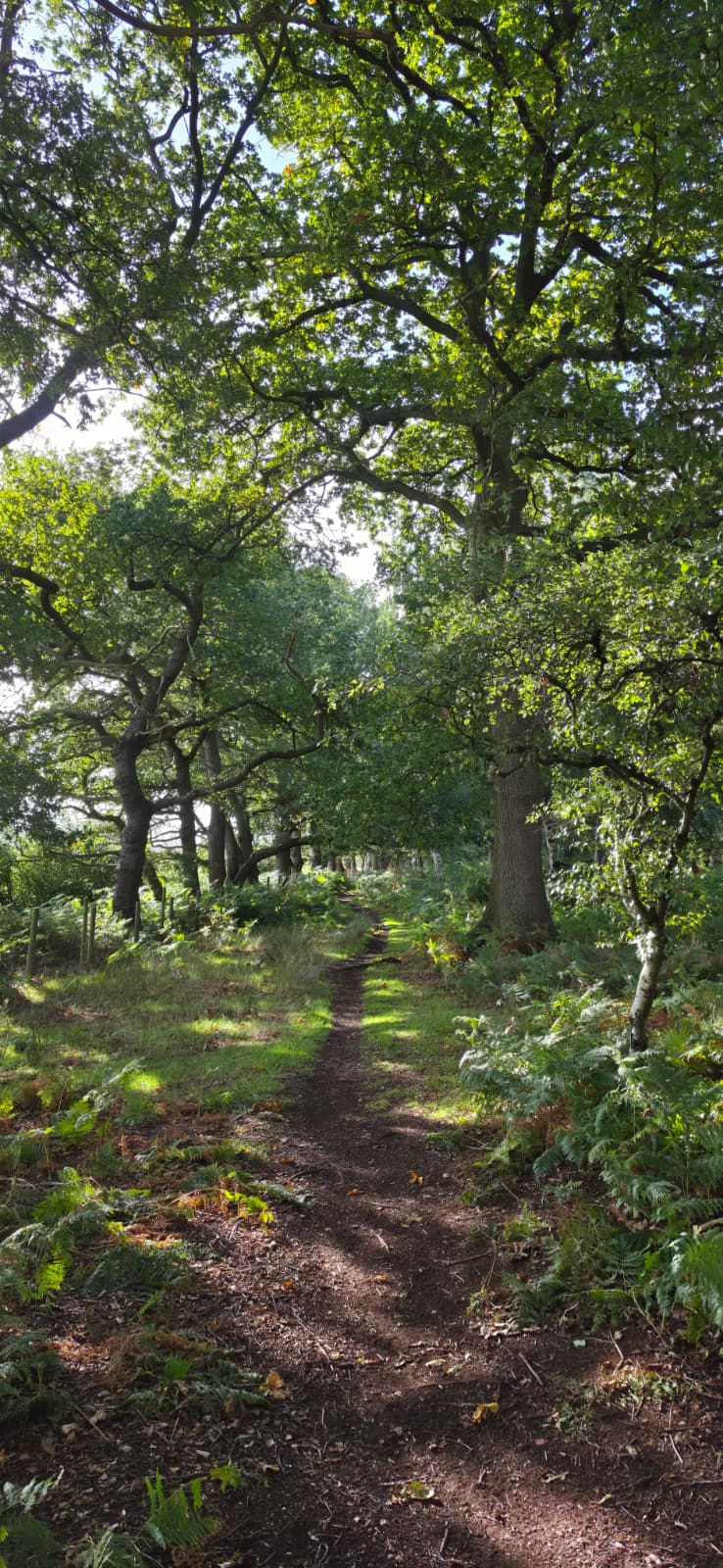
For three days, there was nowhere we particularly needed to be. We watched the wildlife from the cabin, wandered through the trees, stopped by the mosses, and left the main tracks behind whenever curiosity tempted us elsewhere.
It was utterly restorative.
Perhaps more importantly, it gave me space.
I'd begun pondering some future plans and possibilities the week before, but there is something about slowing down completely that changes the quality of thought. Without a deadline for reaching an answer, or even any pressure to find one, thoughts seemed able to stretch out a little.
We had all day to wander, and inspiration rarely seems to mind finding me under those circumstances.
Taking the less obvious path
We were amazed by how much water remained on the other side of the Pennines. Ditches, pools and ponds were still full, and dragonflies patrolled the wet areas around Linmer Moss, frustratingly reluctant to stop for long enough to be photographed.

The fields and grassy areas were parched in places, but still noticeably greener than at home, where so much of the landscape has turned straw yellow.
We walked to Hatchmere and along Blakemere Moss, yet strangely it was some of the smaller, scruffier-looking mosses that held our attention for longer.
They seemed to hold more life.
An early-rising tawny owl screeched from somewhere in the distance as we stood quietly observing. A buzzard lifted from its perch and suddenly the smaller birds nearby scattered with urgency.
There was something lovely about finding more interest in the places we hadn't particularly set out to find.
That's often why we enjoy leaving the main paths through the forest. There is no destination to reach and no particular route to follow. We simply choose a direction and see what we discover along the way, and hope that we can find our way back again with the aid of the OS map app.
This time it was mostly dragonflies, alongside more goldcrests than I think I have ever heard in one area. As usual, they were far easier to hear than to see. I did eventually manage to capture a few on camera, although none of the photographs were particularly sharp.

Near the cabin, many of the other birds were keeping a low profile too. Mid-moult, some were looking decidedly scruffy, with untidy feathers and some balding heads.

Nuthatches seemed to rule the roost, tits flitted in and out, robins watched everything, treecreepers trilled as they flitted from tree to tree, and the jays remained as jittery and skittish as ever. Bats flitted silently past during the evenings as we relaxed in the hot tub.

Even the temperature had transformed. Within two days we'd experienced a difference of around 20 degrees. The cooler air was really welcome, even if the humidity hadn't entirely disappeared.
Seeing further isn't always seeing more clearly
The weekend also gave me an opportunity to experiment with a new addition to my camera kit: a 2x teleconverter for my 180 - 600mm zoom lens.
On my cropped sensor, it gives me an extraordinary reach - effectively taking me out towards 1,800mm.
It sounds wonderful - and it is.
But, that extra reach comes at a cost.
I lose light and some of the sharpness. And because all of my wildlife photography is handheld rather than taken from a tripod, every tiny movement becomes magnified too.
The further I try to reach, the harder I have to work to keep the picture clear.
I couldn't help but think that there was something familiar in that.
When we're trying to work out what comes next, the temptation can be to peer harder into the distance. To find the answer. Make the plan. See exactly where we're going.
Yet sometimes, greater magnification doesn't bring greater clarity.
Sometimes we need more light.
More space.
Less pressure to see all the way to the end.
Over the weekend, I didn't arrive at a perfectly focused picture of the future. I wasn't trying to. But wandering through the forest, talking, thinking, stopping, watching and occasionally doing absolutely nothing gave some half-formed ideas room to become a little clearer.
Perhaps we don't always need to know precisely where we're heading.
Sometimes it is enough to notice which direction draws us.
Not everything in nature is peaceful
Returning home brought a different kind of encounter.
Walking beside the river, we were struck initially by how quiet it seemed. There was very little wildlife around, with one very noticeable exception.
The riverbank cows were deeply agitated. Two cormorants watched in fascination from the trees where they perched like pterodactyls drying out in the sun.
They paced the bank, repeatedly returning to the same place and making the most extraordinarily anguished calls. We watched from a distance for some time, increasingly concerned for their welfare. They sounded as though they were in physical pain, and we wondered whether one of the herd had somehow fallen through a gap in the fence and into the dike.

We contacted the farmer.
He explained that the calves had just begun to be weaned from their mothers.
When we looked into it afterwards, what we read helped explain the intensity of what we'd witnessed. It was uncomfortable to hear and to think about.
Nature connection isn't only about noticing beautiful things.
Sometimes paying attention means noticing things we'd rather not see, too - including the ways that human choices affect the landscape and the other lives within it.
A little further on, another drama was unfolding.
A kestrel was sat high on a wooden pylon, and at first glance, appeared to be choking. Though trough my camera lens, the situation became clearer.
It was eating its supper.
What appeared to be a substantial mouse or a rat was disappearing headfirst, while its legs and tail remained protruding from the kestrel's mouth.
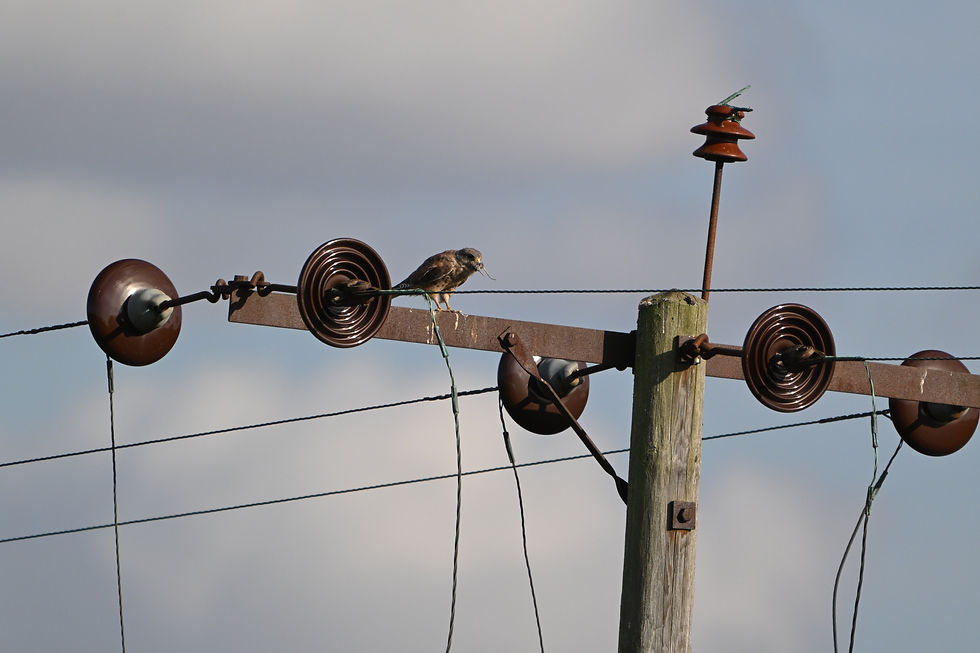
Perhaps not the elegant wildlife encounter I had imagined.
Space for what comes next
In many ways, it was a much-welcomed quiet week.
The forest gave me peace and space to think. Then, after returning home, a catch-up with a friend opened up some interesting new possibilities for collaboration and conversations to be continued rather than plans needing to be settled immediately.
And now there is the promise of a livelier weekend ahead: a day outdoors with my brother and nephews, followed by the boys' first sleepover at our house
Life is rarely dull.
I wouldn't have it any other way.
But increasingly, I recognise how important the quieter spaces are amongst it all.
In coaching, we can sometimes arrive believing that we need to work harder at finding an answer: to think more, analyse more, to look further ahead.
Yet clarity doesn't always come from looking harder.
Sometimes it arrives when the noise falls away.
When there is enough space for thoughts to wander.
When we leave the obvious path for a while.
When we stop demanding that the distant view comes immediately into perfect focus.
Perhaps the next step doesn't always need to be found.
Sometimes, given enough space, it quietly reveals itself to us.
If you’re carrying a question, facing a change, or simply finding it difficult to hear yourself think amongst all the noise, coaching can offer the space to pause and see what begins to emerge.
You don’t need to have the answers - or even know exactly what you’re looking for. Sometimes a little space is enough to begin.
If that sounds like something you might need, you’re warmly welcome to get in touch for a free, no-pressure discovery conversation.




Comments