.png)
What becomes visible when we slow down


The forest after rain: A call to slow down
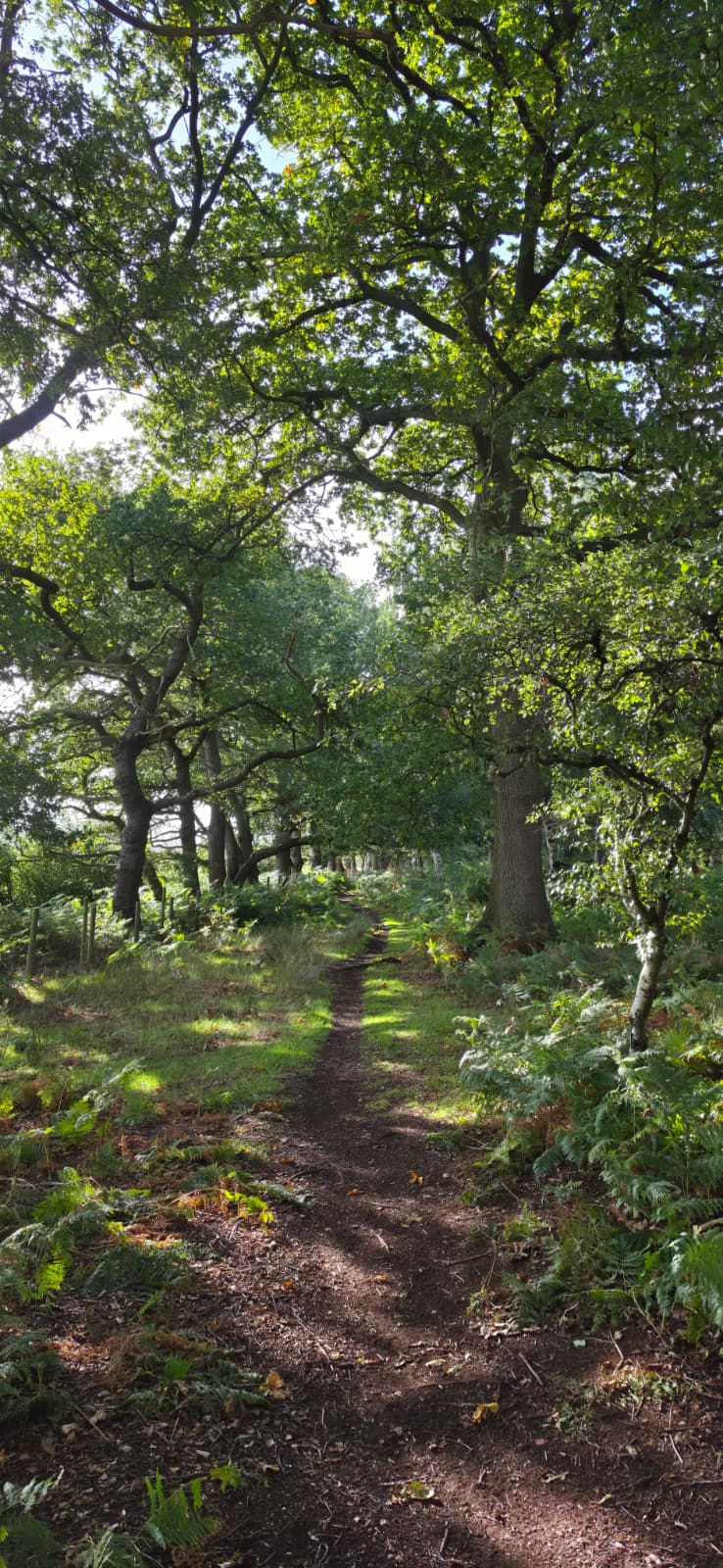
There’s a particular scent to a forest after rain. Fresh pine. Damp earth. Cool air settling quietly between the trees.
The colours appearing more vibrant as though everything has been cleaned.
This week in Glentress Forest, I’ve found myself noticing it more than usual.
Not because I planned to slow down, but because my body insisted on it.
Listening to our bodies: When nature demands rest
After overdoing things slightly in Strathyre last week and suffering from an inadvertent glutening, my Achilles and muscles have been reminding me, rather persistently, that even beautiful places can ask too much of us if we ignore our limits for long enough.
Glentress is not a forgiving landscape when your body is protesting. There is no avoiding the hills, and there are no 'gentle' walks.
Here, when you're not quite right, the hills feel steeper. The climbs longer. The uneven, rocky ground more noticeable.
Normally, I would push through that. I did last week. To keep walking, exploring, and trying to fit everything in.
But this week, it has felt different. Because slowing down changed what I noticed.
Noticing life unfolding: The beauty of small moments
Instead of focusing on covering distance, I found myself paying attention to the life unfolding around me.
The red squirrels first.
Some already in their bright summer coats, vivid orange against the dark greens of the forest. Others caught mid-transition, still patchy and uneven from moulting - not quite one season or another. Like a ‘cut and shut’ squirrel.

There was something strangely human in that.
Transformation in nature and ourselves
How often do we move through our own periods of change feeling unfinished? Not fully who we were. Not yet who we are becoming.
Transformation rarely looks polished while it’s happening. Sometimes it looks awkward, messy, uneven, or incomplete, and yet, the process continues anyway.
The forest doesn’t apologise for being between seasons. Neither do the squirrels.
Along the forest paths, unfurling ferns pushed slowly upward through moss and pine needles, surrounded by wood sorrel, daisies, wood anemones and dog violets softening the edges of the trails.
Tiny stinking parachute mushrooms appeared almost impossibly delicate against the damp earth, scattered like miniature lanterns beneath the trees.

Nothing in the forest seems hurried, everything happening in its own time.
The loud melodic trill of wrens and goldcrests carried through the trees far louder than something so small should be capable of producing.
Nearby, treecreepers moved endlessly upwards in spirals and pauses, climbing, stopping, beginning again.
It struck me how rarely growth happens in straight lines, either in nature or in ourselves.
How often the progress we make is made through pauses, recalibrations, restarts, and slower movement rather than a constant momentum.
Courage in visibility: Lessons from the tree pipit
Then there was the tree pipit.


A tiny bird with an enormous sky above it. Again and again, we watched it rise high into the air before coasting back down toward the scrubland treetops like a parachute with its tail fanned wide, repeating the same delicate display over and over in the hope of attracting a mate.
There was something quietly moving about its persistence.
There was no certainty, or guarantee, just a willingness to rise into open space and be seen, putting itself at risk from predators each time it did.
It made me think about how often courage looks exactly like that in people too.
Not a loud confidence, or fearlessness, just the repeated decision to show up. To try again, and to risk visibility despite uncertainty.
Coaching conversations often begin there - in the space between caution and possibility.
Elsewhere in the forest, life carried on in all its complexity.
In the forest, siskins, chaffinches, robins and tits foraged for food. Elusive bullfinches appeared only briefly before disappearing back into the cover of the trees.
Carrion crows waited opportunistically to scavenge, whilst great spotted woodpeckers arrived - far bolder than at Strathyre, scattering smaller birds without hesitation before claiming food for themselves.
Buzzards called overhead reminding all the other forest birds of the pecking order.
The quiet power of absence, and connection
And yet, this year, there were no crossbills and very few deer either. Their absence felt noticeable because I had expected them. Perhaps there’s something in that too.
Sometimes we return to places, relationships, roles, or even versions of ourselves hoping to find what was there before.
But nature doesn’t stand still for our expectations.
Neither do we.
Yet amid those absences came small moments of quiet connection.
A tiny fawn standing above us on the mossy hillside, watching cautiously from a distance before slipping silently back into the forest. A brief reminder that not everything reveals itself fully, or immediately.

Some things require patience, stillness, and gentleness.
At night, tawny owls hoot somewhere beyond the trees - unseen but unmistakable. Their soft, haunting calls as they hunt carrying through the darkness long after everything else had settled.
A reminder perhaps that not everything meaningful announces itself visibly.
Some things are recognised first by instinct, feeling, or the quiet certainty that something is there, even when we cannot yet fully see it.
That may be the real lesson I’m taking from this slower week.
Coaching as a space to slow down and grow
Not that slowing down is easy. It isn’t.
Especially for those of us used to pushing through discomfort, carrying on regardless, or believing that progress only counts if we are constantly moving forward.
But there are moments when listening to our bodies and allowing our pace to change reveals things we might otherwise miss entirely.
The scent of pine after rain.
The movements of squirrels in the trees.
The flash of a woodpecker’s wings.
The delicate unfurling of ferns.
The impossible voice of a wren or goldcrest.
A small bird climbing bravely into open sky.
And the quiet recognition that growth does not always arrive dramatically.
Sometimes it unfurls slowly and almost imperceptibly, like fern fronds on a damp forest floor - not forced, or rushed.
Simply becoming what it was always meant to be, in its own time.
Perhaps that is what coaching offers too.
Not pressure to move faster or become something different overnight, but space to slow down, listen carefully, and notice what may already be quietly unfolding beneath the surface.
Actionable takeaways:
Pause and reflect: Take a moment each day to pause, breathe, and observe your surroundings. What do you notice that you might have overlooked?
Embrace change: Remember that transformation often feels messy or incomplete. Trust the process and give yourself grace during periods of transition.
Listen to your body: Pay attention to what your body is telling you. Rest when needed, and don’t feel pressured to always push forward.
Seek support: If you’re feeling stuck or overwhelmed, consider reaching out for a coaching conversation to explore what’s quietly unfolding within you.
If this resonates with you, you’re very welcome to explore how I work or reach out for a gentle no-obligation discovery conversation.



Comments